
Selecting the correct valve matters because oilfield environments punish bad decisions. High pressure, extreme temperatures, corrosive or abrasive fluids, and strict safety requirements mean a mismatched valve doesn't just underperform—it can leak, fail, or force unplanned downtime.
This guide defines oilfield valves, groups the most common types by function, explains the real differences between them, and gives you a practical checklist for selection.
TL;DR
- Oilfield valves start, stop, regulate, direct, prevent backflow, or relieve pressure in oil and gas systems
- Main functional groups: isolation, throttling/control, check, and safety/relief valves
- Gate and ball valves isolate flow; globe and control valves throttle it
- Check valves stop backflow; relief valves protect against overpressure
- Choose by fluid, pressure, temperature, flow, materials, connections, actuation, standards, and maintenance
What Are Oilfield Valves and Why Are They Important?
An oilfield valve is a mechanical device that changes or manages the flow path through a pipe, vessel, wellhead, manifold, or process system.
You'll find valves working across every stage of oil and gas operations:
- Upstream: drilling rigs, wellheads, and completion equipment
- Midstream: gathering systems and pipelines
- Downstream: storage terminals, refining units, and industrial fluid systems
Each valve handles one of four core jobs: isolation for maintenance or emergency shutdown, throttling for controlled flow, one-way (check) flow control, or pressure relief to protect equipment.
Get the wrong valve for the job, and consequences follow fast:
- Leakage at seats, seals, or connections
- Restricted or unstable flow
- Backflow that damages pumps or compressors
- Difficult or unsafe manual operation and personnel hazards
- Equipment damage from pressure spikes
- Avoidable shutdowns and repair costs
Industrial check valves, for example, are built to prevent backflow and enforce one-way flow in oil and gas pipelines, water systems, and chemical processing. Use a check valve as your primary shutoff, and you're asking for trouble.
The sections below break down the common oilfield valve types and where each one belongs—so you can match the valve to the duty before problems show up in the field.
Types of Oilfield Valves
Valve names describe different operating mechanisms and functions. The best choice depends on the duty the valve must perform, not on which name sounds most familiar or which valve you've always used.
Isolation and Shutoff Valves
Isolation valves start or stop flow. They're built for open-or-closed service, not continuous throttling.
- Gate valves: Rising or non-rising gate moves fully across the flow path for relatively unrestricted flow and solid line isolation. Slower to operate and a poor throttling choice—partial closure causes vibration and seat wear.
- Ball valves: Quarter-turn spherical closure for tight shutoff and quick operation on liquids and gases. Not every ball valve is gas-rated, so confirm design, seat material, pressure rating, and service approval first. Spicer & Sandburg supplies 3-piece ball valves in carbon steel, stainless, brass, and high-performance alloys for upstream, midstream, and downstream service where corrosion resistance matters.
- Butterfly valves: Rotating disc for compact, large-diameter isolation and frequent operation. The disc stays in the flow path when open, which affects pressure drop.
- Plug valves: Cylindrical or tapered plug for rapid shutoff in pipeline and fluid service. Verify torque, sealing design, pressure/temperature limits, and fluid compatibility before specifying.

Throttling and Control Valves
These valves regulate flow, pressure, temperature, or level by adjusting the size of the flow passage, not just switching between open and closed.
- Globe valves: Linear-motion disc and seat deliver strong throttling at the cost of higher pressure loss than isolation-style valves.
- Control valves: Actuator plus controller adjusts position automatically from process conditions for remote, continuous regulation. The control function sits on a globe, ball, or butterfly body, so "control valve" names a capability, not one mechanism.
- Needle valves: Fine adjustment for instrumentation, sampling, small-bore, drain, or precise flow-control duty. Not a substitute for primary pipeline isolation.
Check Valves
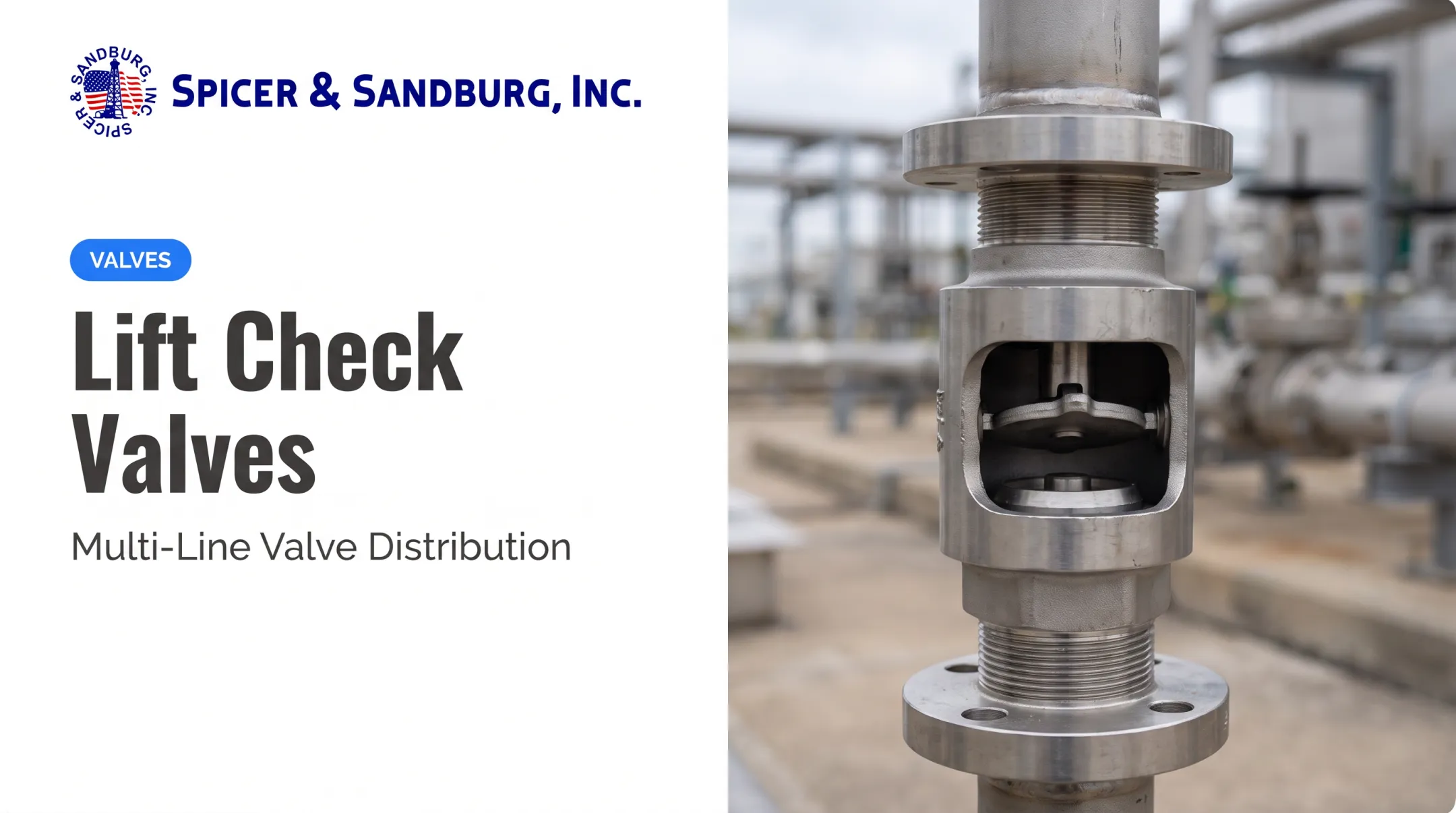
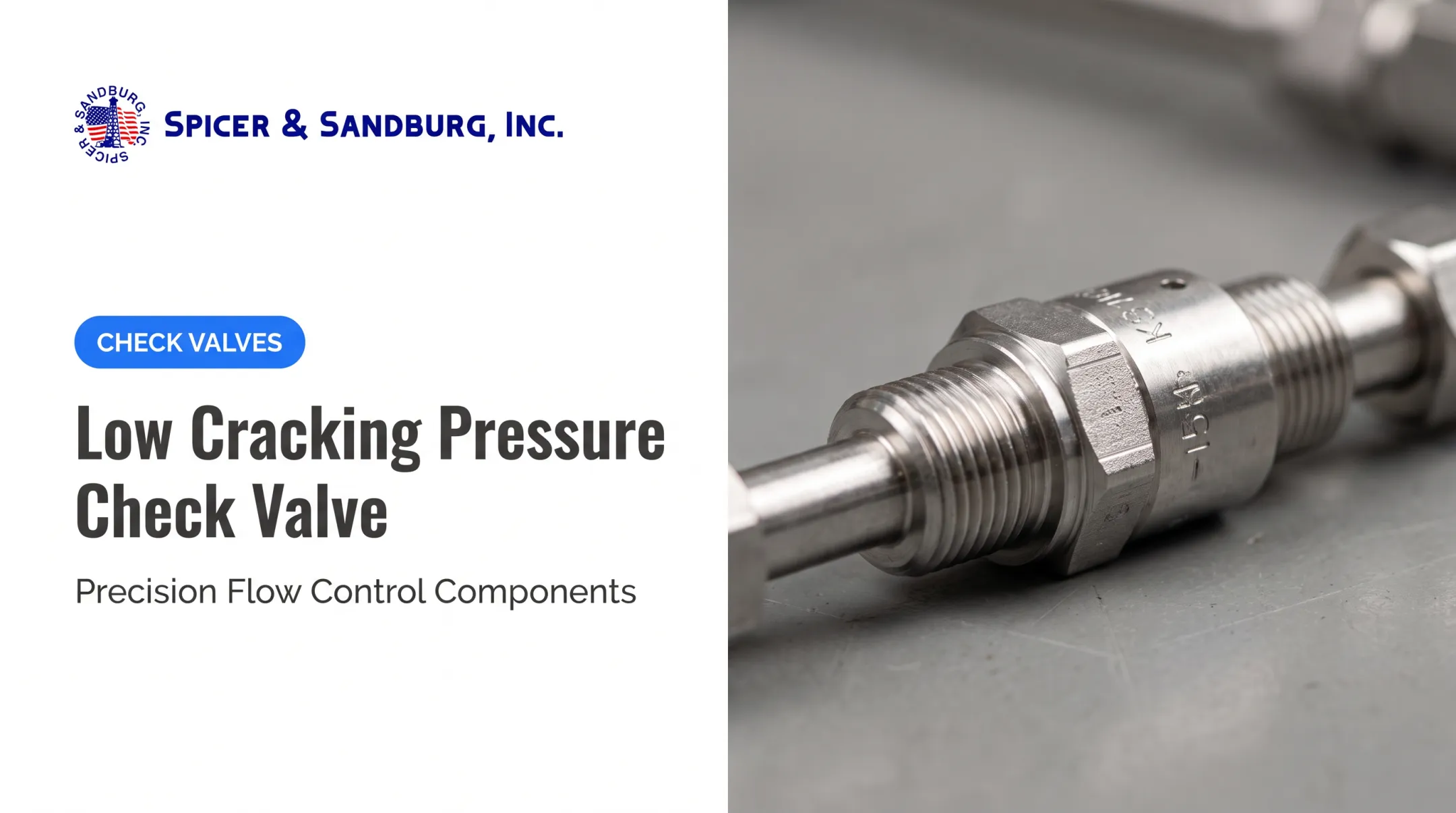
Check valves allow flow in one direction and close automatically on reversal, protecting pumps, compressors, and pipelines from backflow damage.
| Design | How it works | Watch for |
|---|---|---|
| Swing check | Hinged disk swings open with flow | Installation orientation matters |
| Lift check | Closure lifts like a globe valve | Higher pressure drop; less critical service |
| Ball check | Ball shifts with differential pressure | Good for critical or sticky fluids |
| Dual-plate | Spring-assisted plates close fast | Reduces slam, compact wafer designs |
Industrial check valves are typically available with threaded, flanged, or socket-weld connections, and pressure ratings vary by model. Check valves are not manual shutoff valves. Match the design to your expected flow conditions and equipment layout, or you'll end up with chatter, slamming, or premature failure.

Safety, Relief, and Breather Valves
Pressure-relief devices protect vessels, tanks, and piping when pressure climbs past a safe threshold. That's a protective function, distinct from routine isolation.
- Safety/pressure-relief valves: Discharge or control excess process pressure automatically
- Breather/vacuum-relief valves: Protect storage tanks from excessive pressure or vacuum
Before finalizing any relief device, confirm set-pressure, discharge routing, sizing, and materials against API sizing and installation standards for pressure-relieving devices, along with any operator or jurisdictional requirements. Don't rely on generic assumptions here—relief sizing is engineering-specific work.
How the Valve Categories Overlap
"Gate," "ball," "globe," and "butterfly" describe mechanisms. "Isolation," "control," "check," and "relief" describe the job. A single mechanism, like a ball valve, might serve isolation duty in one application and a control role (via a V-notch design) in another.
Terms like wellhead valves, Christmas tree valves, and pipeline valves describe where a valve is used, not what kind it is. A Christmas tree assembly might include gate, check, and choke valves working together.
Actuation (manual, pneumatic, hydraulic, or electric) is a separate decision layer, driven by access, response time, and safety requirements.
How to Choose the Right Oilfield Valve
The correct valve is determined by operating duty, system constraints, and risk—not by picking the most advanced or most familiar option on the shelf.
Purpose and Operating Function
Identify whether the valve must isolate, throttle, prevent backflow, provide emergency shutdown, regulate a process variable, or protect against overpressure. Eliminate any design that can't reliably perform that specific duty.
Service Fluid and Operating Conditions
Assess:
- Fluid composition, viscosity, and solids content
- Corrosiveness, abrasiveness, toxicity, and flammability
- Sour-service exposure
- Temperature and pressure range
- Flow rate and cycling frequency
Pressure, Temperature, and Flow Capacity
Match body, trim, seats, seals, bore, pressure class, and temperature rating to actual operating and upset conditions, using verified manufacturer or engineering data—not generic assumptions.
Size and Connection Requirements
Check line size, face-to-face dimensions, flange or threaded connections, installation space, orientation, and weight compatibility with existing piping.
Actuation, Control, and Fail Position
Determine whether manual operation suffices or if pneumatic, hydraulic, or electric actuation is needed. Then assess:
- Response time
- Remote control and position feedback
- Fail-open or fail-closed behavior
- Emergency-shutdown requirements

Maintenance, Documentation, and Supplier Support
Review inspection intervals, seat and seal replacement schedules, spare-part availability, and material certificates. This is also where a distribution partner earns its keep.
Spicer & Sandburg is a U.S. industrial supply and distribution partner that connects oil and gas and industrial customers with compatible valves, pipe, fittings, and instrumentation through its manufacturer network, including Check-All for check valves and Service Metal for carbon steel fittings and valves. Sourcing support still doesn't replace your engineering review or compliance verification—those stay on your team.
What to Check Before Finalizing an Oilfield Valve
Don't choose by valve name or lowest purchase price alone. Confirm the actual duty, operating envelope, materials, pressure class, flow capacity, connection type, actuator, and required documentation.
Common mismatches to avoid:
- Using an isolation valve for continuous throttling
- Selecting a ball valve for gas service without verifying gas-service suitability
- Installing a check valve without considering flow direction or chatter risk
- Specifying a relief device without confirming sizing and discharge requirements
Also confirm installation and lifecycle details:
- Orientation and accessibility
- Lockout/tagout provisions
- Inspection access
- Corrosion protection
- Replacement-part availability
Train operators to recognize failure signs early. Leaks, sticking, or unusual noise rarely improve on their own.
Conclusion
Oilfield valves perform different jobs across drilling, completion, production, pipeline, storage, and processing systems. No single valve type is right for every service.
Understanding the difference between isolation, throttling, check, and pressure-relief duties helps narrow your choices fast. Pair that understanding with verified operating data and solid supplier documentation, and you'll land on a safer, more reliable final decision.
Frequently Asked Questions
How do you tell if a valve in an oil and gas system is failing?
Watch for external or internal leakage, difficulty operating the valve, abnormal noise or vibration, incomplete shutoff, or unexpected pressure and flow changes. Follow site procedures and qualified inspection requirements when any of these appear.
What types of valves are used in the oil and gas industry?
Common types include gate, ball, butterfly, globe, plug, check, control, needle, safety, relief, and breather valves. The right choice depends on whether the duty is isolation, throttling, backflow prevention, or pressure protection.
Can any ball valve be used for gas?
No. Gas suitability depends on the valve's body and seat materials, sealing design, pressure and temperature ratings, leakage requirements, and applicable manufacturer or industry approvals for the intended gas service.
What is the purpose of a ball valve?
A ball valve uses a quarter-turn ball to start or stop flow, typically offering fast operation and tight shutoff. Most standard ball valves aren't designed for continuous throttling service.
What are the four main types of valves?
The four broad functional groups are isolation/shutoff, throttling/control, check, and pressure-relief valves. Each group includes several distinct mechanical designs, like gate versus ball for isolation.
What is a valve in the oil and gas industry?
A valve is a mechanical device that controls, isolates, directs, checks, or relieves the flow and pressure of fluids or gases through oilfield and industrial systems.