
Choosing that product isn't always simple. Should you use grease or oil? What does a thickener actually do? Does NLGI grade tell you anything about temperature limits? Many maintenance teams struggle with these questions, often defaulting to "whatever's on the shelf" rather than what the equipment actually needs.
This guide breaks down what industrial grease and lubricants are made of, the major types available, how to select the right one, and how to maintain your lubrication program so it actually protects your equipment.
Key Takeaways
- Grease combines base oil, thickener, and additives — each one changes performance and compatibility.
- Oil and grease—and different greases—are not automatically interchangeable, regardless of color or texture.
- Selection depends on load, speed, temperature, water/chemical exposure, and relubrication access.
- Always check the technical data sheet (TDS) and safety data sheet (SDS) before switching products.
What Are Industrial Grease and Lubricants?
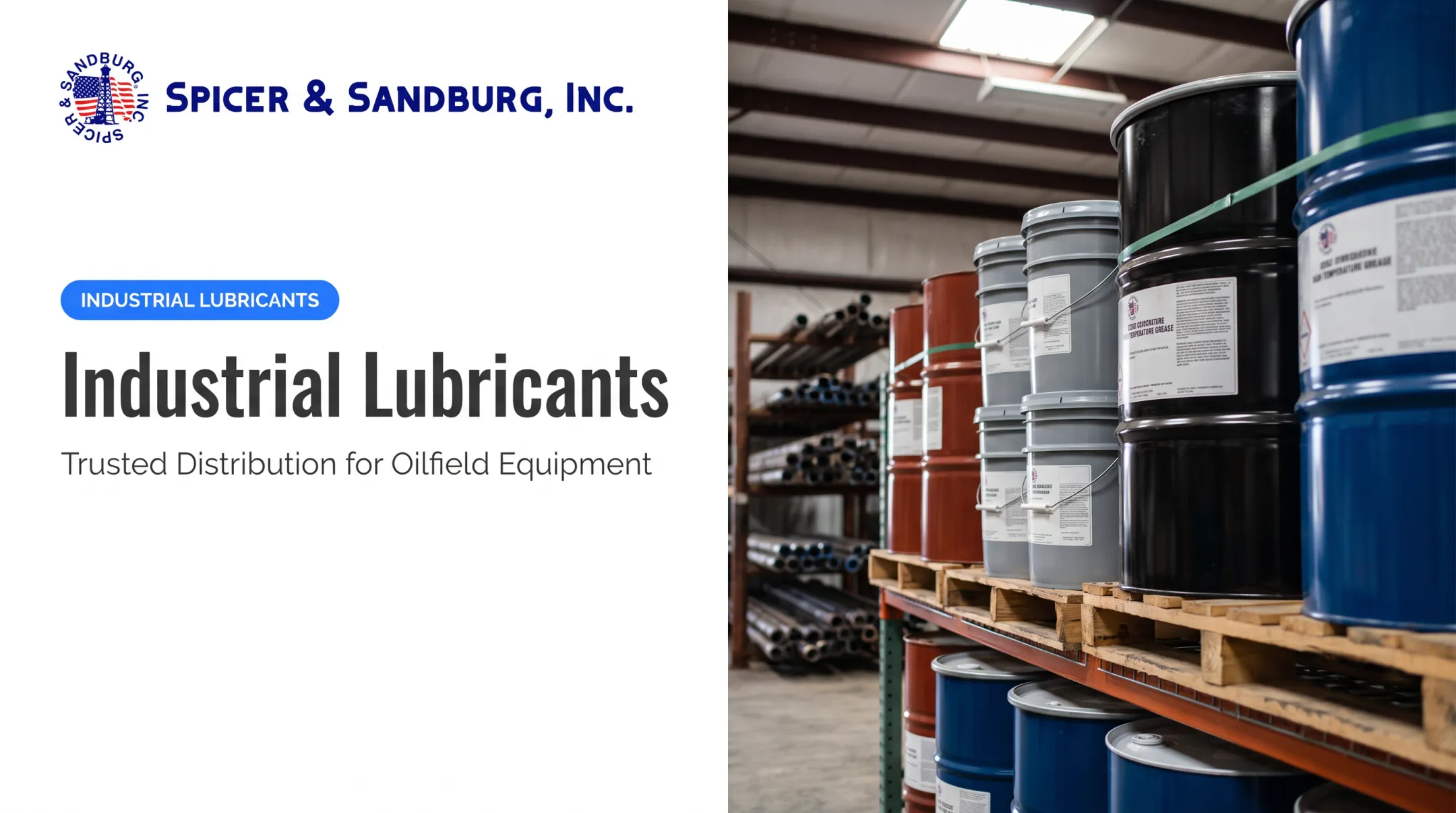
Industrial grease is a semi-solid lubricant. A thickener holds base oil and additives in a structure that stays put on a component, rather than draining or splashing away like a liquid lubricant would. That's the whole point of grease: retention.
Three ingredients determine how a grease behaves in service.
The Three Core Components
- Base oil — supplies the actual lubricating film. Mineral oils handle general-purpose jobs affordably; synthetic base oils perform better under extreme temperatures or high speeds.
- Thickener — creates the semi-solid structure. It controls consistency, water resistance, shear stability, and whether the grease is compatible with other products.
- Additives — deliver targeted protection: anti-wear, extreme-pressure (EP) performance, rust and corrosion inhibition, oxidation resistance, tackiness, or solid-lubricant properties like moly or graphite.

Grease vs. Liquid Lubricants
Grease and liquid lubricants (hydraulic oils, gear oils, compressor oils, turbine oils, circulating oils) solve different problems:
Choose grease when the lubricant needs to stay in place, seal out contaminants, or serve a component that's hard to reach for frequent relubrication.
Choose oil when you need heat removal, continuous circulation, filtration, high-speed operation, or precise viscosity control.
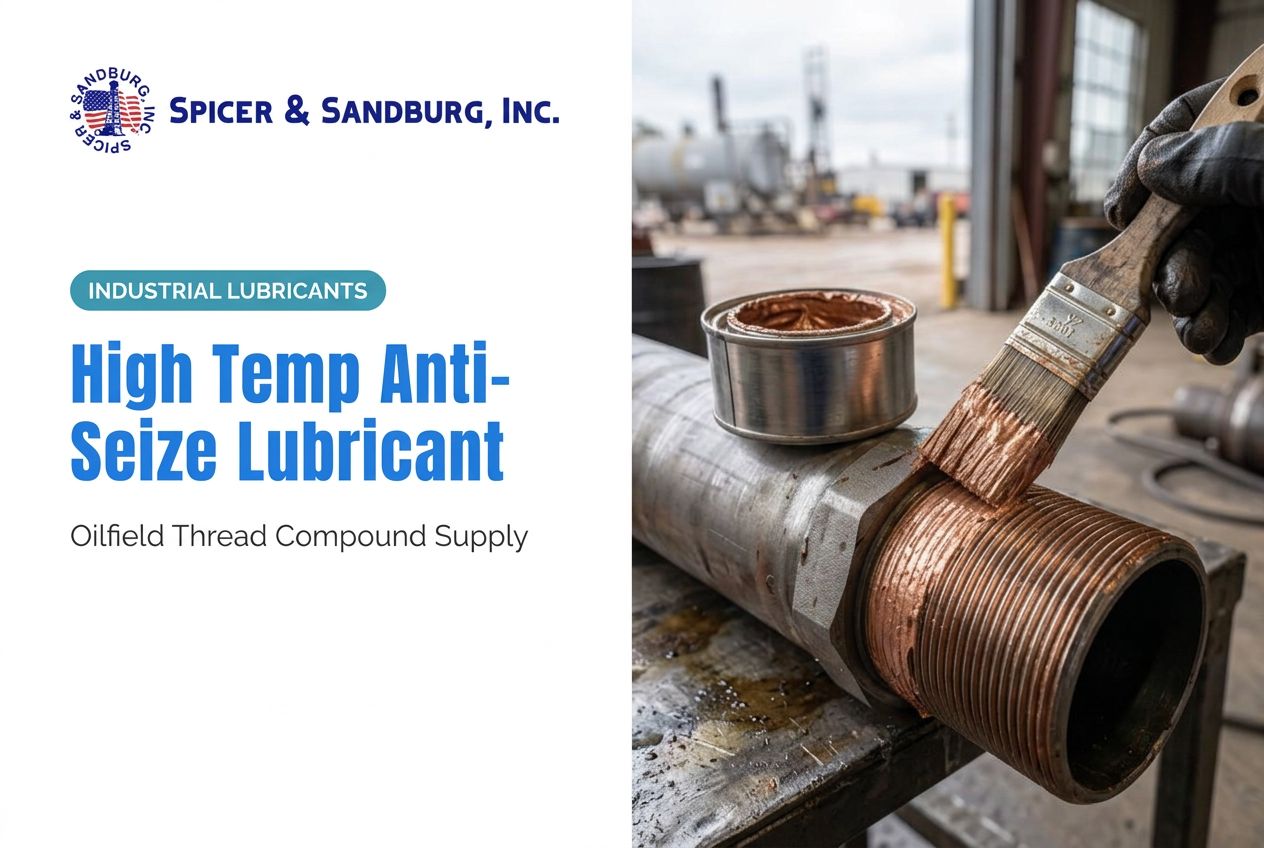
Choose dry films or coatings when oil or grease would attract dust, contaminate a process, or fail in extreme heat—moly, graphite, and PTFE coatings cut friction without a fluid film.
Reading a Product Data Sheet
When comparing products, look for these performance markers:
- Base-oil viscosity — sets film strength under load and speed
- NLGI consistency — grades how firm or pumpable the grease is (typically 000–6)
- Pumpability — matters for centralized systems and cold start-up
- Water resistance — shows washout and corrosion behavior in wet service
- Dropping point — indicates when the thickener softens and the grease loses structure
- Oxidation and shear stability — predict life under heat, air, and mechanical working
- Low- and high-temperature limits — define the usable operating window
Types of Industrial Grease and Lubricants
Grease is classified by thickener chemistry, base oil, additive package, consistency, and intended application — not by color.
Thickener Families Compared
| Thickener | Strengths | Watch-outs |
|---|---|---|
| Lithium / lithium complex | General-purpose versatility, mechanical stability, decent water resistance | Confirm the specific formulation: "lithium" isn't one product |
| Calcium / calcium-sulfonate complex | Strong water resistance, high load carrying | Simple calcium has weaker temperature performance |
| Sodium | Good metal adhesion | Poor water resistance, frequent relubrication needed |
| Polyurea | Thermal stability, oxidation resistance, good for sealed-for-life motor bearings | Lower shear stability, compatibility needs checking |
| Clay/bentonite | Doesn't melt at high temperature | Non-soap chemistry may not mix with soap-based greases |
| Specialty categories worth knowing: |

- Extreme-pressure (EP) grease for heavy shock loads
- Moly or graphite-containing grease for boundary lubrication and sliding surfaces
- High-temperature grease for kilns, ovens, and dryer bearings
- Water-resistant grease for wet or washdown environments
- Wire-rope and open-gear compounds for exposed components
Understanding NLGI Grades
NLGI grades run from 000 (semi-fluid) to 6 (block grease, the thickest standardized grade). A higher number means firmer grease; lower numbers pump more easily. Don't confuse consistency with performance. NLGI grade tells you nothing about:
- Base-oil viscosity
- Load capacity
- Maximum operating temperature
A Word on Color
Manufacturers sometimes color-code grease for identification, but there's no industry-wide convention. Two blue greases from different manufacturers could be chemically incompatible. Never assume compatibility based on appearance. By application:
- Bearings and electric motors: often lithium or polyurea
- Gears and heavy-equipment joints: often EP or moly-fortified formulas
- Chains and wire rope: typically tacky, penetrating products
- Valves and pipeline components: food-grade or chemical-resistant greases, depending on service
How to Choose the Right Industrial Grease or Lubricant
Start with the equipment manufacturer's recommendation. Before you consider a replacement, lock down:
- The component and application
- How lubricant is delivered (manual, automatic, or centralized)
- The product currently in use
- Operating conditions on site
Match the Product to Operating Severity
- Assess the load: Steady, shock, vibration, or impact loading determines whether you need anti-wear or full EP protection.
- Assess speed and heat generation: A grease built for a slow, heavily loaded bearing can fail fast in a high-speed motor application.
- Confirm the temperature range: Don't mistake dropping point for a continuous operating temperature limit. ASTM D2265 explicitly states that dropping point values above 200°C don't correlate with maximum service temperature.

Evaluate Environmental Exposure
- Water washout or humidity
- Dust, dirt, and abrasive particles
- Chemical exposure or washdown routines
- Outdoor vs. enclosed operation
Check Compatibility Before Switching
Different thickeners, base oils, or additive packages can be incompatible. Mixing them can cause softening, hardening, oil separation, or a total loss of lubrication protection. Consult the manufacturer's compatibility guidance and TDS rather than mixing based on similar color or NLGI grade.
Practical purchasing considerations:
- Product availability and packaging (cartridge, pail, drum)
- Dispensing method compatibility
- Documentation (TDS, SDS) on hand
- Consistency across your entire lubrication programme
Those last points are easier to hold when one supplier owns the programme. Spicer & Sandburg connects oil and gas, manufacturing, construction, and pipeline customers across the United States with industrial manufacturers such as Tripak Superlubricants for high-temperature lubricants and greases.
When you request guidance or a quote, include equipment details, current lubricant data, operating conditions, and required quantity. That information shortens the path to the right match.
Industrial Applications and Lubrication Best Practices
Grease and lubricant needs vary by setting:
- Drilling and production equipment — high-load, often high-temperature components
- Pipelines and valves — corrosion protection, chemical resistance
- Bearings and conveyors — consistent relubrication intervals
- Heavy construction equipment — shock loads, dirt, water exposure
- Manufacturing machinery and electric motors — precision, thermal stability
Tripak Superlubricants are formulated for exactly this range: machinery lubrication, drilling operations, and heavy equipment maintenance, with a focus on reducing wear and extending equipment lifespan across upstream, midstream, and downstream operations.
Application and Storage Discipline
- Clean fittings before greasing — dirt introduced at the point of application is a common failure cause
- Use manufacturer-recommended quantities; over-greasing wastes product and can blow seals
- Store grease in clean, sealed, clearly labeled containers, following the manufacturer's temperature and shelf-life guidance
- Document lubricant type, NLGI grade, application point, quantity, and interval — this prevents cross-contamination and missed maintenance
- Investigate unusual heat, noise, leakage, vibration, or discolored grease immediately; these are early failure signals, not cosmetic issues
Conclusion
The right industrial grease or lubricant is the one matched to your equipment's actual load, speed, temperature, and environment. Labels like "heavy-duty," the thickest NLGI grade, or a particular color do not guarantee that fit. Before switching products, verify equipment requirements, review the TDS and SDS, and confirm compatibility. When the application is uncertain, work with a qualified industrial supplier such as Spicer & Sandburg to match your operating conditions to a proven formulation.
Frequently Asked Questions
What are the different types of industrial grease?
Common thickener families include lithium, calcium, aluminum, polyurea, clay, and calcium-sulfonate complex. The correct choice depends on load, speed, temperature, water exposure, and equipment requirements.
What is the thickest grade of grease?
NLGI 6 is the thickest standardized grade on the consistency scale, which runs from 000 to 6. Thicker doesn't automatically mean better performance or higher temperature resistance.
What kind of grease is best for heavy equipment?
Heavy equipment typically needs grease matched to high loads, shock, vibration, water, and dirt exposure. Always check the equipment manufacturer's specification before choosing.
What is better, lithium or moly grease?
These aren't direct alternatives — lithium is a thickener family, while moly is an additive or solid lubricant. Select the full formulation based on load, sliding conditions, speed, and manufacturer guidance.
What's the difference between lubricant and grease?
Grease is a semi-solid lubricant made from base oil, thickener, and additives. "Lubricant" is the broader category that includes oils, greases, and solid or dry-film products.
What is industrial grease made of?
Base oil, thickener, and additives. The base oil lubricates, the thickener creates structure and retention, and additives add targeted protection like anti-wear or corrosion resistance.