
Many contractors grab whatever tape or dope is closest on the truck. That's a mistake. Gas thread sealant has to be rated specifically for fuel gas service, not general plumbing use, and the wrong product can react with LP gas or fail under pressure. This guide breaks down tape versus pipe dope, how to pick a code-compliant product, and the application steps that actually keep joints sealed.
Key Takeaways
- Gas thread sealant must carry a fuel-gas rating; general-purpose plumbing sealant isn't code-compliant
- Yellow PTFE tape and gas-rated pipe dope are the two accepted options for threaded joints
- Flare fittings seal via metal-to-metal contact and should never get tape or dope
- Application technique (wrap direction, coverage, and torque) matters as much as the product itself
- Always pressure-test with an approved leak-detection method before putting the line into service
What Is Gas Pipe Thread Sealant and Why It Matters
Threaded gas fittings rely on sealant to fill the microscopic voids left by tapered thread geometry. The sealant doesn't fix bad threads. It lubricates them so metal can make contact, then fills the imperfections that remain. That's the whole job.
Skip the sealant, or use the wrong one, and you get consequences fast:
- Gas leaks at the joint, sometimes undetectable without proper testing
- Code violations that fail inspection
- Safety hazards ranging from minor leaks to explosion risk
This isn't a gray area in code. The 2021 International Fuel Gas Code's Section 403.8.3 requires thread joint sealant on gas connections. Current state-adopted versions specify that the sealant must be:
- Nonhardening
- Resistant to the gas being conveyed
- Compatible with the pipe and fitting material
Local and state fuel gas codes typically reference this baseline directly. Choose a product that meets the code your jurisdiction has adopted — not one that just looks like the right kind of tape.
PTFE Tape vs. Pipe Dope for Gas Lines
Yellow PTFE Tape for Gas
Yellow tape marks a manufacturer classification, not a color preference. Gas-rated PTFE tape is formulated and tested specifically for natural gas, propane, and butane service, unlike the white or pink tape sitting in the plumbing aisle.
Why techs reach for it:
- No cure time: the joint is sealed the moment it's assembled
- Clean application with no mixing or brushing
- Indefinite shelf life in storage
- Works well on small-to-medium fittings up to about 1½ inches
One manufacturer's gas-rated tape data sheet lists a service range from -450°F to 500°F and pressure ratings up to 300 PSI for gas and liquid service. Those numbers belong to that specific product, not to "yellow tape" as a category. Always check the label.
Gas-Rated Pipe Joint Compound (Pipe Dope)
Not every pipe dope on the shelf is safe for gas. Many general-purpose compounds are made for water or oil lines and can react poorly with LP gas, so only compounds explicitly labeled for gas service should touch a fuel line.
Where dope earns its place:
- Fills larger gaps on bigger fittings
- Resists vibration better than tape on some joints
- Performs well on metal-to-metal threads in larger diameters
Some gas-rated dopes carry pressure ratings up into the thousands of PSI, with wide temperature tolerance for outdoor and industrial exposure. Others are rated much more conservatively (125 PSI, vapor-phase gas only). The spread between products is significant, so the label is the only reliable guide.
Which Performs Better for Gas Applications
Neither product universally wins. The right call depends on fitting size, operating pressure, and vibration exposure.
| Factor | Yellow PTFE Tape | Gas-Rated Pipe Dope |
|---|---|---|
| Cure time | None — immediate seal | Varies by product; check label |
| Ease of use | Fast, clean, no mixing | Requires brushing, thin coat |
| Best fitting size | Small to medium | Larger fittings, metal-to-metal |
| Vibration resistance | Moderate | Often better |
| Temperature range | Product-specific, often very wide | Product-specific, varies widely |

No controlled, published failure-rate study compares tape to dope head-to-head; available manufacturer data covers individual product specs only. Many experienced gas techs combine both on critical joints, but only when the compound's instructions and the fitting manufacturer's instructions both permit it. Don't assume compatibility.
How to Select the Right Gas-Rated Sealant
Before you specify a product, run through this checklist:
- Confirm material compatibility. Steel, brass, and stainless threads don't all interact with sealant the same way. Check the label for explicit compatibility with your pipe and fitting metal.
- Check the temperature range. Gas lines see wide swings across buried lines, rooftop equipment, and outdoor meters. A product's brushable range and its operational range aren't always the same number, so read both.
- Verify certification. Look for NSF, UL, or an explicit fuel-gas listing (such as ANSI LC 7) on the data sheet. A general NSF/ANSI 61 water-contact certification is not the same as a fuel-gas approval.
- Confirm the pressure rating covers your system. A dope rated for 125 PSI vapor-phase gas isn't interchangeable with one rated for 3,000 PSI service.
Sourcing matters here too. Spicer & Sandburg works with BESTOLIFE, a thread-compound manufacturer with more than 80 years in petroleum and oilfield applications, to supply pipe dope and thread compounds for industrial and oil and gas connections.
For material compatibility questions, Spicer & Sandburg's network also includes Merit Brass (brass and stainless pipe nipples) and Service Metal (carbon steel fittings, flanges, and valves). Use those lines as references when you match sealant to fitting metal.
Always confirm the exact certification and gas-service rating on the specific product's data sheet before use. Don't assume a manufacturer's overall reputation covers every SKU.

Step-by-Step: Applying Sealant on Gas Pipe Threads
Applying Yellow PTFE Tape
- Clean the threads — remove old tape, dope, rust, or debris.
- Start one thread back from the pipe end so tape can't enter the gas stream.
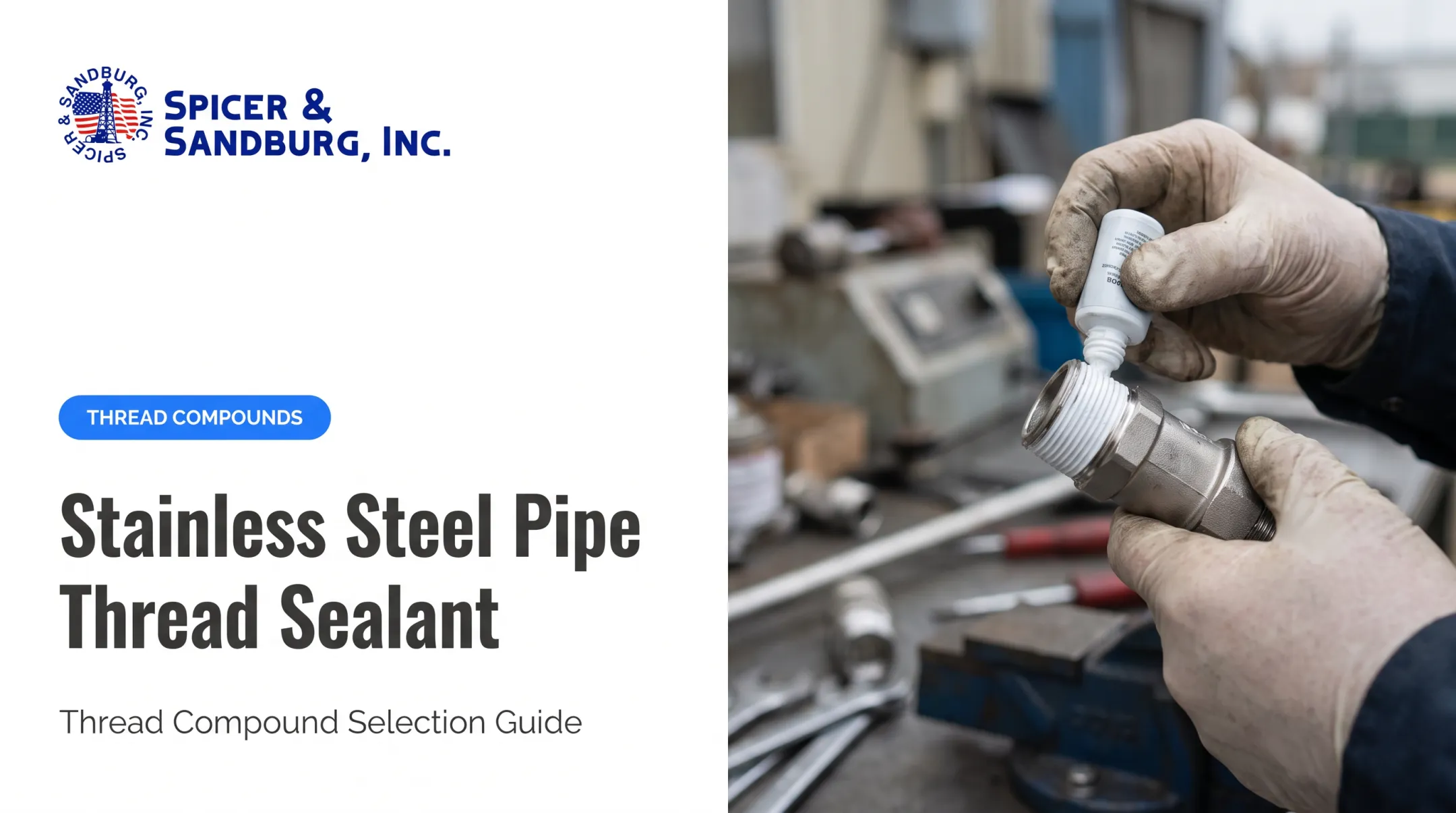
- Wrap clockwise (the tightening direction) 3-5 times, depending on tape density and manufacturer instructions.
- Press the tape into the threads so it seats without folding or bunching.
- Assemble immediately — hand-tighten, then finish with a wrench to the manufacturer's snugness guidance.
Applying Gas-Rated Pipe Dope
- Stir the compound to restore even consistency before use.
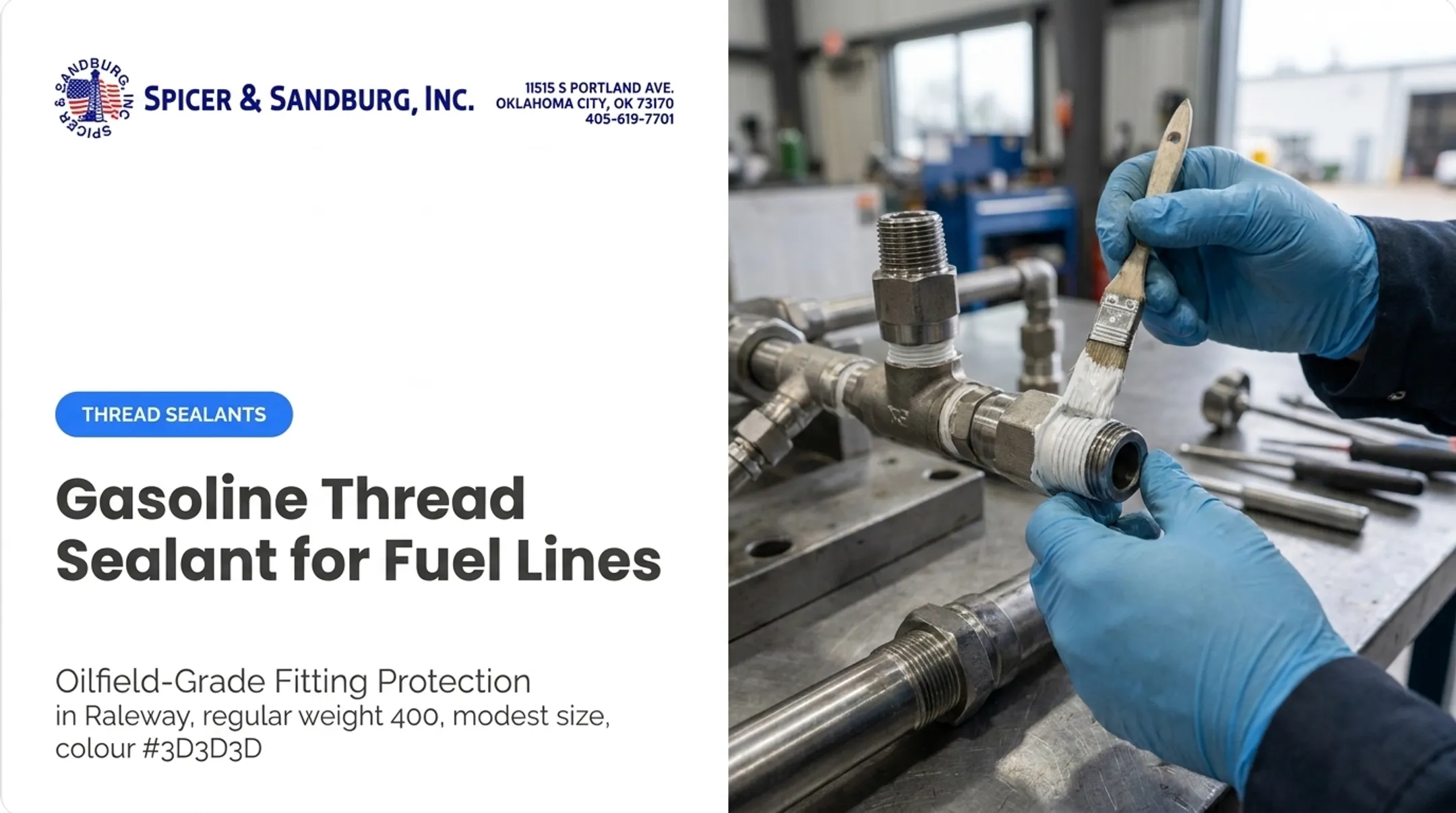
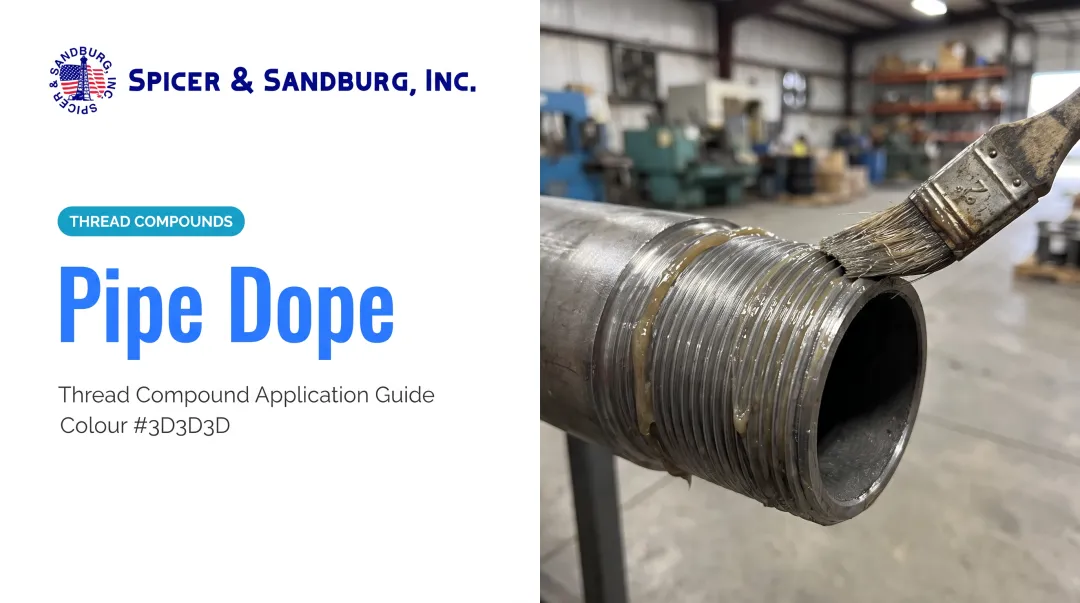
- Brush a thin, even coat on male threads only — never inside the female fitting.
- Leave the first thread bare so compound can't migrate into the gas bore.
- Assemble and tighten immediately to the manufacturer's torque or snugness instruction.
Low-pressure gas connections using pipe dope typically seal right away with no cure time required. Confirm this on the product label, since some formulations need a set period before pressurization.

Critical Mistakes and Code/Safety Considerations
Never apply tape or dope to flare fittings. Flare connections seal through direct metal-to-metal contact between the flare nut and fitting seat. Adding sealant actually interferes with that seal and can cause a leak, not prevent one.
Other common errors that lead to failed joints:
- Overtightening — cracks fittings, especially brass and cast iron, and lubricated threads make it easy to over-torque without realizing it
- Sealant migrating into the gas path — clogs orifices in downstream equipment
- Using non-gas-rated products — general plumbing tape or dope may react with LP gas or fail to hold pressure
- Inadequate threads — no amount of sealant fixes a poorly cut or damaged thread
After assembly, always perform a leak test using an approved, noncorrosive leak-detection fluid or a listed combustible-gas detector before the line goes into service. Skip the open flame. Manufacturer instructions and fuel gas codes both prohibit it. The system needs to hold its specified test pressure without any evidence of leakage.
If you're not a licensed gas technician, this is the point to bring one in. Fuel gas code requirements vary by jurisdiction, and a professional will know the specific sealant and testing requirements that apply to your installation.

Frequently Asked Questions
What is the best thread sealant for gas lines?
Yellow PTFE tape or gas-rated pipe dope, chosen based on fitting size and code requirements. Both are code-compliant when the specific product is labeled for fuel gas service.
What thread sealant is recommended for propane fittings?
The same gas-rated tape and compounds used for natural gas typically work for propane, but always confirm the label explicitly lists propane compatibility before use.
Does pipe dope work better than PTFE tape for gas lines?
Neither is universally better. Tape suits smaller fittings with no cure time; dope handles larger fittings and vibration exposure better. Match the product to your specific joint.
Can pipe joint compound (pipe dope) be used on gas lines?
Yes, but only formulas explicitly labeled and rated for gas service. General-purpose pipe dope for water lines is not an acceptable substitute.
When should you not use pipe dope?
Never on flare fittings, which seal through metal-to-metal contact. Also avoid it when the label doesn't confirm compatibility with your specific pipe material or gas type.
Is pipe dope bad for you?
Use in a ventilated area, avoid skin and eye contact, and wear gloves. Review the product SDS for chemical-specific handling and disposal guidance before use.