
Pick the wrong one, though, and you're looking at premature wear, unplanned downtime, contamination issues, and maintenance bills that didn't need to happen. Many facilities still choose lubricants based on a label that says "heavy duty" or "multipurpose," without checking the equipment manual first.
This guide covers lubricant types, how to select the right one, application methods, storage, and safety, specifically for US industrial and oil and gas operations.
Key Takeaways
- Match lubricant type—oils, greases, solids, or specialty fluids—to the equipment and operating conditions
- Base selection on OEM specs, viscosity, temperature, load, speed, and application method
- Storage, contamination control, and condition monitoring matter as much as the lubricant itself
- Prioritize technical data sheets and supplier guidance over price or generic marketing claims
What Is an Industrial Lubricant?
An industrial lubricant is a substance formulated to create a protective film, or reduce resistance, between moving or contacting surfaces in machinery and industrial systems. In practice, it's the thin layer standing between your bearing and metal-on-metal contact.
Core functions include:
- Reducing friction between bearings, gears, chains, shafts, valves, and pumps
- Carrying away heat generated by moving parts
- Protecting surfaces from rust and corrosion
- Sealing clearances against dirt and moisture
- Suspending contaminants and carrying them toward filters
Why Film Formation Matters
Lubricant performance shifts across three conditions: boundary, mixed, and full-film lubrication. Under boundary lubrication, surfaces make partial contact because the film is too thin, often during startup or under heavy load. Full-film lubrication separates surfaces completely, which is the goal during steady operation.
Speed, load, temperature, and surface condition all affect which state you're in. A lubricant that performs well at full-film conditions can still fail during a low-speed startup if it wasn't selected with that transition in mind.
Those film states depend on a few building blocks:
- Base fluid
- Thickener (for grease)
- Additive package
- Viscosity or consistency
- Delivery method to the component
Get those wrong, and the film fails when operating conditions change. Poor or inadequate lubrication is a primary cause of industrial equipment wear and failure, according to Machinery Lubrication, and those gaps drive unplanned downtime, production losses, and higher energy use. Treat lubricant selection as a reliability decision, not a routine stock item.

What Are the Different Types of Industrial Lubricants?
The best lubricant type depends on the equipment, the environment it runs in, and the manufacturer's specification. There's no universal answer here.
Liquid Lubricants
Liquid lubricants cover a wide range of applications, and each demands something different:
- Hydraulic systems need fluids that transmit power efficiently while protecting pumps and valves
- Gearboxes require film strength to handle sliding and rolling contact under load
- Compressors and turbines demand thermal stability and oxidation resistance at sustained high temperatures
- Circulating systems and bearings need consistent viscosity across a range of speeds
- Metalworking operations rely on lubricants that also manage heat and chip removal
Mineral vs. synthetic base fluids: ExxonMobil notes synthetic lubricating oils can offer improved thermal and oxidation resistance compared to mineral oils.
Atlas Copco describes synthetic compressor oil as offering better thermal stability and longer service intervals. Mineral oil remains a cost-effective option for milder conditions but typically needs more frequent changes.
These are formulation tendencies, not guarantees. Always verify specific performance claims against current manufacturer documentation before switching products.
Greases
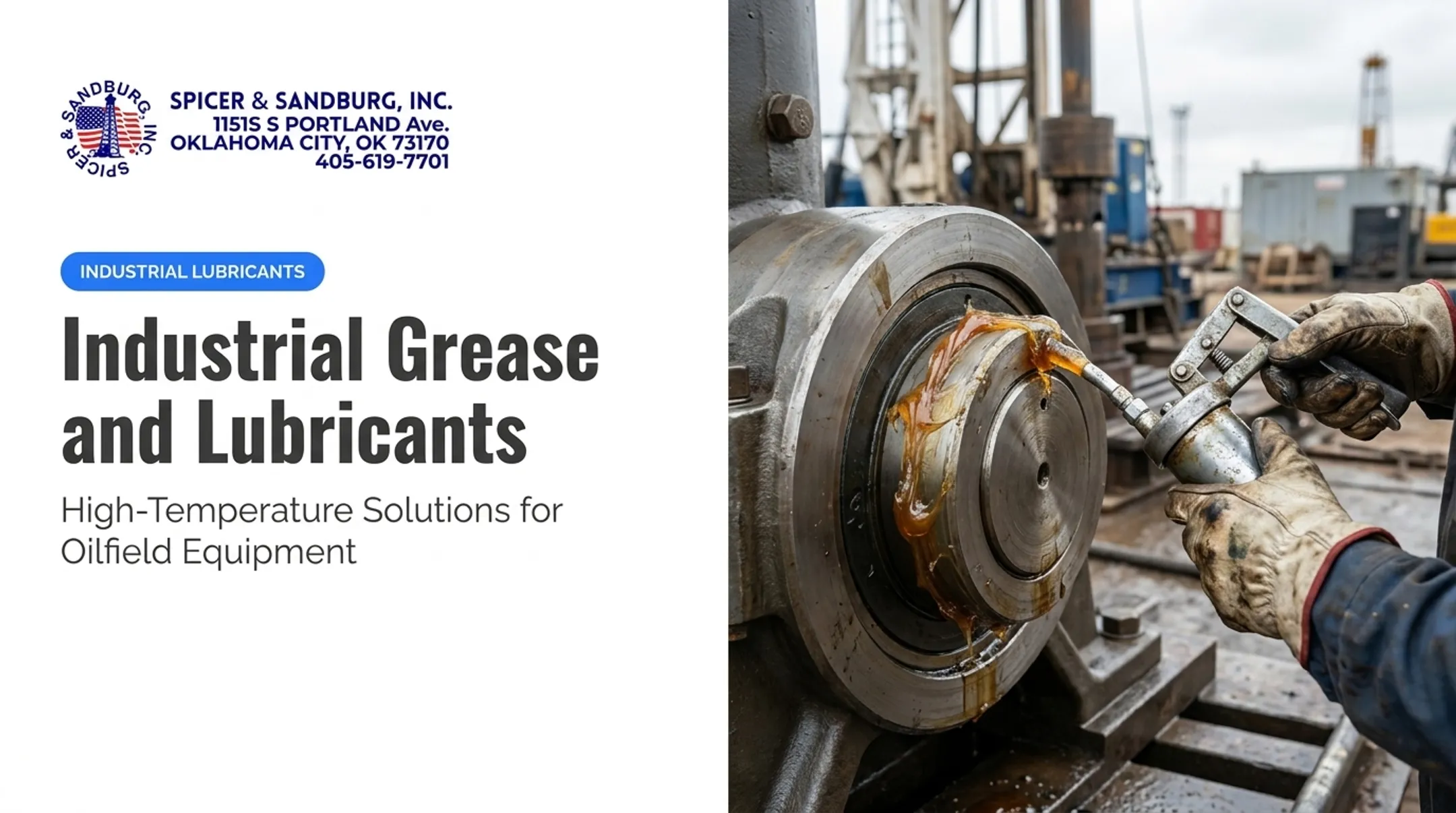
Grease is base oil plus a thickener plus additives. That thickener is what lets grease stay put in a bearing where oil would simply drain away. This makes grease the go-to choice for:
- Bearings and electric motors
- Conveyors and slow-moving components
- Wet or dusty equipment where oil reapplication is impractical
NLGI grade is not a substitute for viscosity. NLGI consistency measures resistance to deformation via cone penetration testing, not the base oil's flow characteristics.
A grease can carry the "right" NLGI number and still use the wrong base-oil viscosity for your application. Grade 2 is common, but the correct choice depends on bearing type, speed, temperature, water exposure, and OEM instruction, not habit.
Solid, Dry, and Specialty Lubricants
Some applications don't suit oil or grease at all. Dry lubricants like graphite, PTFE, and molybdenum disulfide (MoS2) work in high-temperature, vacuum, or low-contamination environments where liquid lubricants would migrate, evaporate, or attract debris.
MoS2, for example, performs well in vacuum and dry conditions but loses effectiveness when exposed to moisture and breaks down above certain temperature thresholds. Specify it only when those conditions match the application.

Specialty fluids also fill particular niches:
- Fire-resistant fluids: check FM Approval status for the specific application
- Food-grade lubricants: look for NSF H1 registration or ISO 21469 certification
- Biodegradable/environmentally acceptable lubricants (EALs): relevant standards include ASTM D8324-21 and EPA Vessel General Permit requirements
Don't assume compliance. Confirm the exact certification and application conditions before specifying any of these.
How Do You Choose the Right Industrial Lubricant?
Start with the equipment manufacturer's manual and lubrication chart. Not the shelf label. A product marketed as "synthetic" or "heavy duty" tells you almost nothing about whether it fits your specific gearbox or pump.
Match Viscosity to Real Operating Conditions
Viscosity or consistency needs to align with operating temperature, shaft speed, load, clearance, and startup conditions. Too thick, and you get poor flow and higher energy consumption at startup. Too thin, and the film breaks down under load, leading straight back to metal-on-metal contact.
STLE notes that base-oil viscosity selection comes first, driven by speed, temperature, and load, before anything else gets decided. ISO 3448 classifies industrial liquid lubricants by kinematic viscosity, but that classification alone doesn't confirm quality or fitness for your application.
Consider Load, Environment, and Additives
- Pressure and shock loading: Anti-wear or EP additives help under load, but may create seal or lubricant compatibility issues
- Environmental exposure: Water, dust, chemicals, washdown, and temperature swings drive corrosion, water-separation, and thermal stability needs
- Application method: Oil, grease, spray, and dry-film each fit different scenarios
Sprays deserve a specific caution. They're useful for targeted access, penetration, or temporary protection on light-duty mechanisms. They are not automatically appropriate for bearings, sealed components, electrical parts, brakes, belts, or high-load machinery. Let the product label, SDS, technical data sheet, and OEM instructions determine where a spray belongs.
Never Mix Without Confirmation
Check compatibility with seals, elastomers, plastics, coatings, and any existing lubricant already in the system. STLE draws a clear line between "comparable" and "compatible" products.
Incompatible residue can degrade lubricating properties or even gel in extreme cases. Don't mix products unless manufacturers confirm compatibility in writing.
Look at Total Cost, Not Sticker Price
A cheaper lubricant that needs relubrication twice as often, generates more waste, or increases downtime risk isn't actually cheaper. Factor in:
- Relubrication intervals and labor
- Energy consumption
- Waste and disposal costs
- Downtime risk if the wrong product fails early
- Oil analysis costs
- Overall equipment life

This is where a broader supplier relationship helps. Spicer & Sandburg works with industrial, oil and gas, manufacturing, and heavy-equipment customers to evaluate lubricant options through its distribution partnership with Tripak Superlubricants. The goal is matching the right formulation to actual operating conditions.
Industrial Lubrication Best Practices
A lubrication program only works if it's documented and followed consistently. Build an asset-by-asset lubrication schedule that records:
- The lubricant specification for each component
- Application quantity and point
- Frequency
- Responsible personnel
- Relevant OEM requirements
Application and Contamination Control
Clean fittings and surfaces before applying lubricant. Use calibrated dispensing equipment rather than guessing quantities. Over-greasing a bearing is just as harmful as under-greasing it, since excess grease can raise operating temperature and blow seals.
Contamination control matters just as much:
- Keep containers sealed when not in use
- Use clean, dedicated transfer tools
- Label everything clearly
- Protect stock from dirt, moisture, and cross-contamination between products
Catch Problems Before Failure
Condition-based checks catch wear before it turns into downtime:
- Visual inspections
- Temperature checks
- Vibration monitoring
- Oil analysis
Tighter alarm limits and consistent oil analysis improve equipment availability and cut leak-related issues. Results vary by facility, but the principle holds: condition-based monitoring catches problems that calendar-based schedules miss.

Train your maintenance team on product identification, safe handling, application procedures, spill response, and documentation. A schedule only works when the team can execute it correctly every time.
Handling, Storage, and Safety
Good storage habits protect product quality and keep inventory usable:
- Store lubricants in clean, dry, covered areas with stable temperatures
- Keep labels intact and shield stock from water, dust, sunlight, and temperature extremes
- Rotate first-in, first-out so older stock does not sit past its shelf life
For drums and containers:
- Prevent drops or impact damage during handling
- Use appropriate lifting equipment for larger containers
- Keep containers closed except during dispensing
- Dispense only through clean, dedicated equipment
Safety and Compliance
OSHA's Hazard Communication standard requires a workplace program covering container labels, safety data sheets, and employee training, with SDS documents accessible during every shift. Use the product-specific SDS to determine first aid procedures, handling and storage requirements, and PPE needs.
That same SDS guidance drives spill response. OSHA recommends:
- Gloves and protective clothing to limit skin contact
- Eye and face protection matched to the task
- Spill-control materials kept on hand
- Ventilation and fire precautions aligned to the lubricant's hazard profile
Disposal and Recycling
Used lubricants and contaminated absorbents fall under EPA and state rules. Under 40 CFR Part 279, used-oil generators must store used oil in properly labeled tanks or containers in good condition.
Used oil is generally presumed recyclable unless a handler disposes of it directly. Facilities storing larger volumes may also fall under Spill Prevention, Control and Countermeasure (SPCC) requirements.
Keep documentation ready for audits:
- Original product labels
- Current SDSs
- A documented relationship with an approved used-oil recycler
Frequently Asked Questions
What is an industrial lubricant?
An industrial lubricant is a substance formulated to reduce friction and protect surfaces in machinery. It manages heat, prevents wear and corrosion, and keeps equipment running reliably in industrial settings.
What are the different types of industrial lubricants?
Main categories include:
- Liquid oils for hydraulic systems and gearboxes
- Greases for bearings and slow-moving components
- Solid or dry lubricants for high-temperature or vacuum settings
- Specialty fluids such as fire-resistant or food-grade products
What is the best lubricating spray?
The best spray depends on the material, load, temperature, moisture exposure, and the equipment manufacturer's instructions. No single spray suits every industrial application.
What should you not apply lubricant to?
Avoid brakes, friction surfaces that must stay dry, and electrical contacts unless the product is specifically approved for that use. Never apply lubricant to contaminated surfaces or components the OEM prohibits.
Where can I buy lubricants online?
Buy through manufacturer-authorized distributors and established industrial suppliers, including Spicer & Sandburg. Always verify technical data sheets, SDS documents, packaging, and compatibility before you purchase.